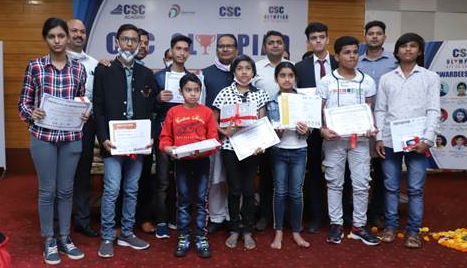
Will be released to CSC Olympiad changes rural education, which gives students an opportunity to compete in national and international forums regardless of their geographical location. The fifth edition of the CSC Olympiad (CSC Olympiad 5.0) has ended, with more than 280,000 students from remote rural areas in 15 subjects, which is an important milestone in bridging educational differences between urban and rural India. Out of registered students, 113,576 students participated in practice examinations and more than 100,000 online examinations were conducted with AI Proctorial. Remarkable, 163 students have been selected for the demonstrated scholarship declared by the Common Service Center e-Governance under the Ministry of Electronics and IT.
CSC Olympiad 5.0 strengthens education
CSC Olympiad 5.0, for students from class 3 to 12, conducts examinations in 10 regional languages including Hindi, English, Tamil, Marathi, Gujarati, Odia, Telugu, Malayalam and Bengali, ensuring access and inclusion. Beyond the academic evaluation, the objective of the Olympiad is to promote leadership and communication skills and increase the role of the Common Service Center (CSC) as an important educational facility in rural communities.
The results of CSC Olympiad 5.0 will be released on the official website, with a well -organized online portal to facilitate scholarship claims. This initiative is a symbol of an ideal change in rural education, providing students to compete on national and international forums regardless of their geographical location. CSC Olympiad is not just one exam; This is the catalyst of change, ensuring that no student is left behind in search of knowledge and excellence.
Skills grow and create a sense of confidence
CSC Managing Director and CEO Mr. Sanjay Rakesh said, “CSC Olympiad acts as an important bridge that connects rural students with opportunities that otherwise they can miss.” “By providing a platform for educational evaluation and competitive engagement, we are not only enhancing their skills, but are also creating a sense of confidence in them and preparing them for future educational and professional challenges. This initiative has become a ray of hope, which has demonstrated the power of technology to make education democratic.”