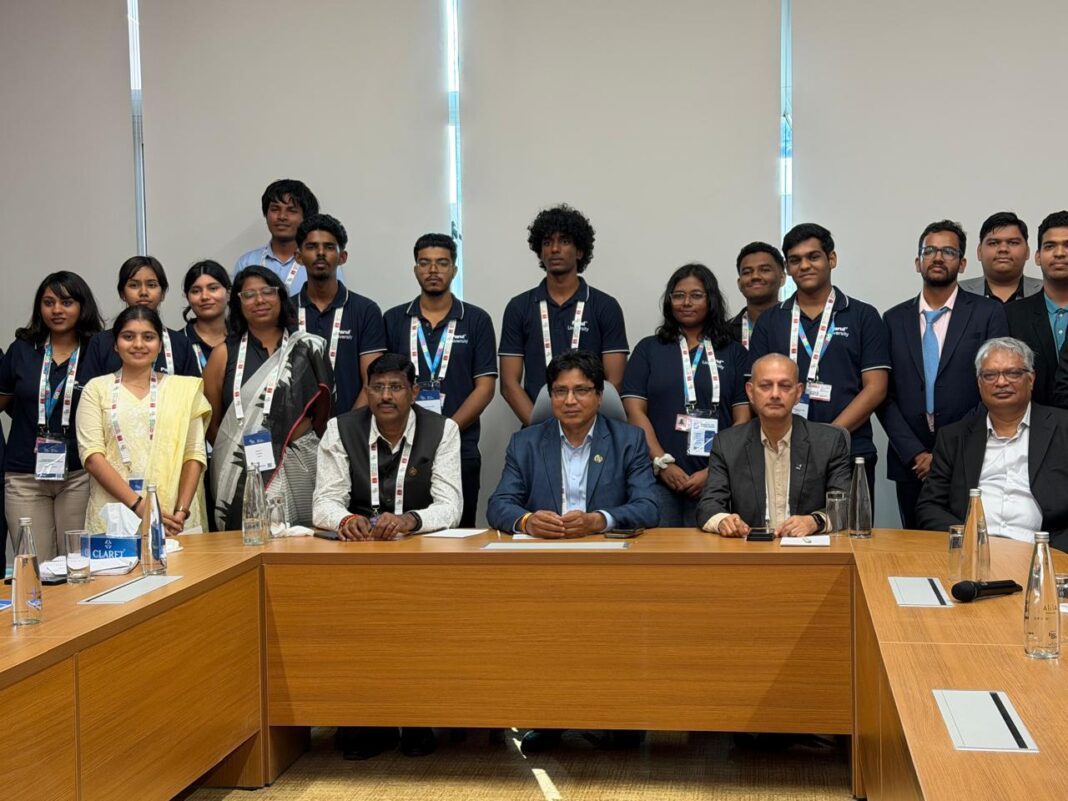
An integrated and development-oriented energy transition that balances clean energy expansion with alternative and low-carbon fuels is essential for India’s Net Zero journey, said Pradip Kumar Das, Chairman and Managing Director, Indian Renewable Energy Development Agency Ltd. (IREDA), during a roundtable at India Energy Week 2026 in Goa.
Participating in the session on “Net Zero Emissions: Environmental, Economic and Social Implications – Role of Oil and Biofuels in the Transition”, Das said India’s approach to decarbonisation is already delivering results by scaling renewable energy alongside alternative fuels. Initiatives such as ethanol blending are reducing import dependence, lowering emissions and strengthening energy security, while supporting the country’s development-led pathway towards Net Zero by 2070 and the target of 500 GW non-fossil fuel capacity by 2030.
He noted that with India’s per capita electricity consumption still significantly below the global average, the transition must remain phased, realistic and growth-friendly. Oil and gas, he said, will continue to play a transitional role in sectors such as transport, petrochemicals and industry, ensuring affordability and system stability, while biofuels provide a scalable decarbonisation pathway using existing infrastructure and supporting rural livelihoods.
Das highlighted that India’s clean energy expansion represents a major nation-building opportunity, generating employment across engineering, finance, data and project management. He stressed that a just and affordable transition, supported by reskilling and domestic manufacturing, will be critical to maximising social and economic benefits.
He also participated in the CEO Roundtable on “Global Green Hydrogen and its Derivatives Offtake”, emphasising that coordinated policy support and scalable financing are vital for accelerating India’s green hydrogen and ammonia markets and positioning the country as a global production and export hub.