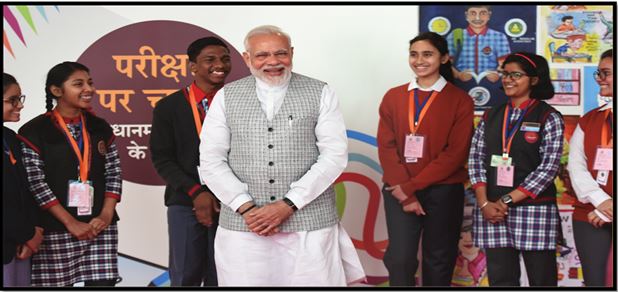
National Education Day, celebrated annually on November 11, honors Maulana Abul Kalam Azad, India’s first Education Minister and a key advocate for educational reform. Recognizing the role of education in shaping the nation’s future, this day underscores the government’s dedication to building a strong educational foundation for India’s youth, with a particular focus on enhancing access and quality for all.
Transforming India Through Education
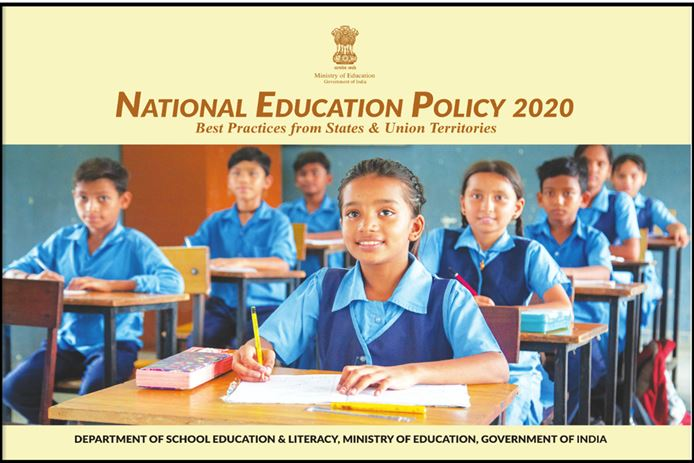
The Government of India has implemented several initiatives to make education accessible and equitable. The 86th Amendment of the Constitution established the Right to Education (RTE) Act, which mandates free and compulsory education for children aged six to fourteen. Through policies and frameworks, such as the RTE and various government programs, India is actively working to ensure quality education for all children.
National Education Policy (NEP) 2020: Approved by the Union Cabinet in July 2020, the NEP 2020 aims to modernize India’s education system, aligning it with the needs of the 21st century and fostering a more inclusive and innovative approach to learning.
PM SHRI Schools: Launched in September 2022, PM SHRI Schools (PM Schools for Rising India) aims to enhance over 14,500 schools across India by incorporating NEP 2020 elements to strengthen quality education, cognitive development, and 21st-century skills, backed by a ₹27,360 crore investment over five years.
Samagra Shiksha: This inclusive educational initiative, launched in 2021, aims to create equitable classrooms by supporting diverse student needs and encouraging active participation and academic growth.
NIPUN Bharat: Established to ensure foundational literacy and numeracy by Grade 3, NIPUN Bharat has set a completion goal of 2026-27 to lay a strong base in literacy across India.
PRERNA: A pilot initiative launched in 2024, PRERNA offers experiential learning to select high school students in a week-long residential program, blending heritage with cutting-edge technology.
ULLAS: The Nav Bharat Saaksharta Karyakram, known as ULLAS, is focused on adult literacy for individuals aged 15 and above, especially those who missed formal education, to help them integrate more fully into society.
Vidyanjali and DIKSHA platforms encourage community involvement in education and professional development for teachers, enhancing resources for teachers and students nationwide.
SWAYAM Plus: Launched in 2024, this program aims to improve employability by providing industry-relevant courses with a unique credit recognition system.
NISHTHA: A major initiative for teacher advancement, NISHTHA offers online and in-person training modules to enhance skills across all educational levels.
Investment in Education for a Brighter Future
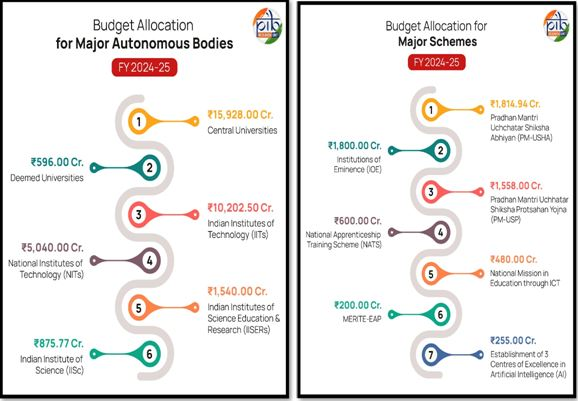
In FY 2024-25, a record ₹73,498 crore was allocated to the Department of School Education & Literacy, reflecting a 19.56% increase from the previous year. Notable investments include ₹9,302 crore for Kendriya Vidyalayas (KVS) and ₹5,800 crore for Navodaya Vidyalayas (NVS), highlighting the government’s focus on strengthening educational infrastructure.
Promoting Higher Education and Inclusivity
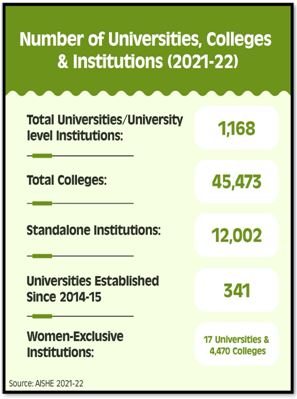
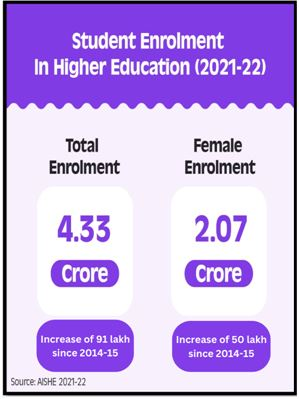
The All India Survey on Higher Education (AISHE) for 2021-22 revealed an increase in student enrolment, including significant growth in female enrolment, which rose from 1.57 crore in 2014-15 to 2.07 crore in 2021-22. Programs like PM-Vidyalaxmi offer financial assistance to meritorious students, making quality higher education more accessible.
Conclusion
Education has the power to break down barriers, create opportunities, and enable individuals to contribute meaningfully to society. By continuously reforming its educational landscape, India is building a system that nurtures its youth, creating a resilient and progressive nation.