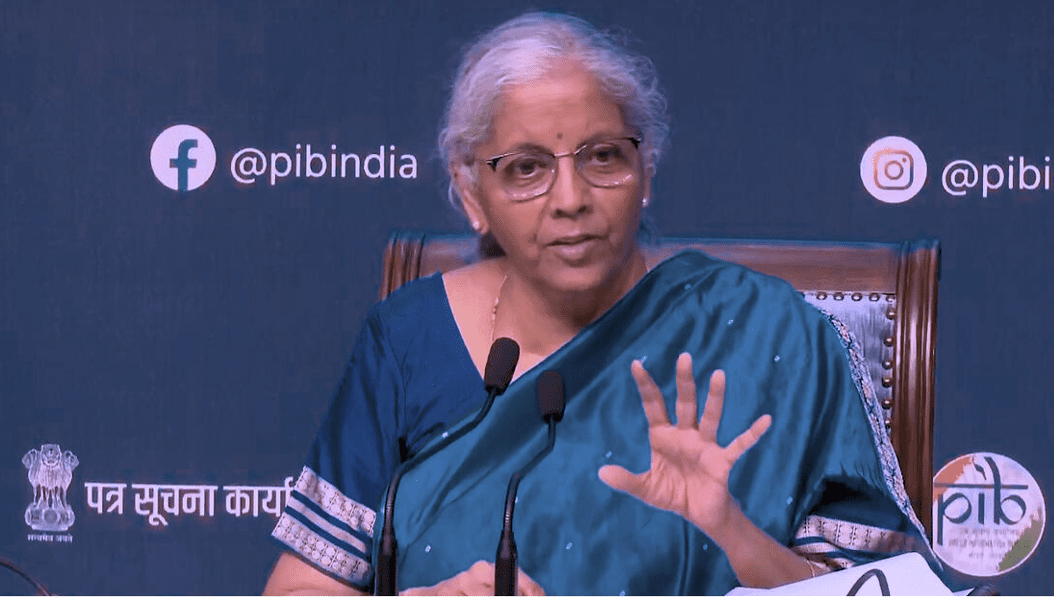
Sandeep Kumar: – Goods and Services Tax (GST) Council, in its 56th meeting, approved the Central Government’s proposal to revamp the tax structure into a simplified two-rate system, Union Finance Minister Nirmala Sitharaman announced on Wednesday.
The changes are aimed at benefiting the common man, supporting small businesses, and enhancing ease of doing business, in line with Prime Minister Narendra Modi’s announcement of “Next-Generation GST” during his Independence Day address.
The decisions were taken by the GST Council, chaired by Finance Minister Nirmala Sitharaman, with participation from Union and State representatives.
The Council approved rate rationalisation by merging the existing 4-tier structure into a citizen-friendly 2-rate system –
- 5% (Merit Rate) for essential and common-man items
- 18% (Standard Rate) for most goods and services
- 40% (Special Rate) for sin and luxury goods such as tobacco, pan masala, and yachts.
The Council also exempted GST on life insurance and health insurance policies, making them more affordable for individuals and families, and extended relief across agriculture, healthcare, education, and labour-intensive industries.
The new GST rates will come into effect from 22 September 2025 for services and most goods.
- Tobacco and related products will shift to the higher 40% slab once compensation loans are repaid, expected later this year.
These reforms will apply across India, impacting multiple sectors including agriculture, healthcare, insurance, automobiles, textiles, and hospitality.
The reforms aim to reduce the burden on citizens, correct inverted duty structures, promote compliance, and strengthen economic growth. The government projects significant fiscal relief while ensuring inclusivity. Finance Minister Sitharaman noted:
“These changes put the common man at the center of GST. Essential goods and services have been made more affordable, labour-intensive sectors have received support, and industries will benefit from a simpler, transparent system.”
- Essentials at NIL GST: UHT milk, paneer, chapatis, parathas, and 33 life-saving drugs to attract 0% GST.
- Daily-use items cheaper: Soap, shampoo, toothpaste, toothbrush, bicycles, kitchenware, namkeens, noodles, chocolates, coffee, and ghee reduced to 5%.
- Automobile relief: Small cars, motorcycles (≤350cc), buses, trucks, ambulances, and auto parts reduced from 28% to 18%.
- Cement & construction: Cement GST cut from 28% to 18%.
- Agriculture support: Tractors, cultivation machinery, and composting equipment down from 12% to 5%.
- Healthcare boost: Medical devices, surgical instruments, diagnostic kits, and glucometers now at 5%; 33 more essential medicines exempted.
- Insurance relief: GST exemption on all life and health insurance policies (including senior citizens and family floaters).
- Hotels & services: Accommodation under ₹7,500 per day now taxed at 5%; gyms, salons, barbers, and yoga centres at 5%.
- Textiles & fertilizers: Correction of inverted duty with man-made fibres and yarn now at 5%; fertilizers like sulphuric acid and ammonia also cut to 5%.
- Renewable energy: Devices and components for clean energy brought down to 5%.
Institutional Reforms
- Goods and Services Tax Appellate Tribunal (GSTAT) to be operational by September 2025 for appeals, with hearings starting by December 2025.
- Uniform rules for auto parts with 18% GST, reducing classification disputes.
- Process reforms in GST law and valuation rules for better transparency.
The Next-Generation GST is expected to empower households, support small traders, and strengthen India’s economy through simplified compliance and fairer taxation. By making essentials cheaper and industries competitive, the reform sets the stage for a more inclusive and citizen-centric tax regime.