Two-day NIFT International Conference 2026, themed “Design for Inclusive Futures”, successfully concluded at the National Institute of Fashion Technology (NIFT), Mumbai campus. The event coincided with the completion of four decades of NIFT’s contributions to fashion education, design innovation, sustainability, and industry engagement in India.
Addressing the plenary session, Shri Giriraj Singh, Union Minister of Textiles, said that NIFT has emerged as a key economic driver for India’s textile and craft sectors, with each graduate supporting an estimated 8,000–10,000 jobs over their lifetime. He highlighted that India is moving towards indigenous design standards through initiatives such as IndiaSize and VisionNxt, promoting self-reliance and strengthening India-specific design identity in line with the vision of Aatmanirbhar Bharat.
Minister emphasised the Government’s support to the sector, citing measures such as reduction of GST on affordable clothing from 18% to 5% and removal of trade barriers, including cotton import duties, which have contributed to growth. He further noted that NIFT’s design expertise extends beyond fashion to sectors like automobiles and logistics, underscoring the institute’s growing national relevance. Shri Singh encouraged NIFT alumni to build strong global networks and proudly represent the “I AM NIFT” identity worldwide, contributing to Vision 2047.
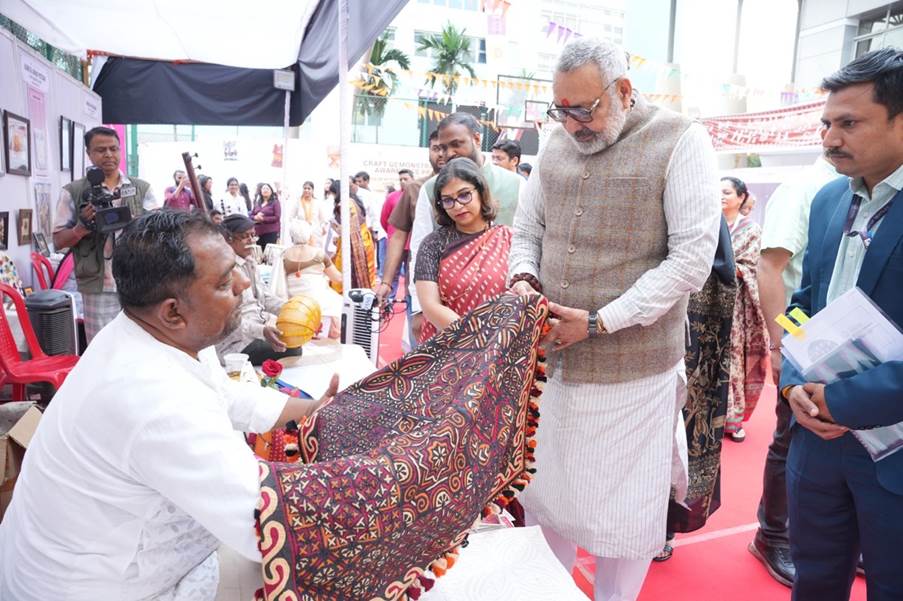
The inaugural session featured distinguished dignitaries, including Neelam Shami Rao, Secretary, Ministry of Textiles; Tanu Kashyap, Director General, NIFT; Prof. (Dr.) Noopur Anand, Dean, NIFT; Prof. (Dr.) Ajit Kumar Khare, Director, NIFT Mumbai; Prof. (Dr.) Sudha Dhingra, Director, Centre of Excellence for Khadi; and Prof. (Dr.) Rupa Agarwal, Conference Chair. The event also saw the release of the book NIFT @40 “धरोहर”, the unveiling of the NIFT@41 logo, and inauguration of the Craft Bazaar.
Neelam Shami Rao highlighted the role of design in national development and appreciated NIFT’s initiatives such as VisionNxt and IndiaSize, as well as curriculum restructuring. She emphasised NIFT’s contribution to the Prime Minister’s 5F Vision—Farm to Fibre, Fibre to Factory, Factory to Fashion, and Fashion to Foreign—and stressed ethical design practices, respect for artisans, and documentation of traditional knowledge.
The conference featured 23 peer-reviewed research papers across four thematic tracks and a series of workshops addressing accessibility, ethics, sustainability, and future-ready design. Curated exhibitions and craft bazaars ran alongside the sessions, providing an interactive platform for academic and industry engagement.