Three-day conclave in New Delhi to explore chip design, AI computing, indigenous semiconductor technologies and strategic defence applications
New Delhi, October 13: The DRDO ESTIC 2026 semiconductor session will focus on next-generation chip technologies, artificial intelligence (AI) computing and indigenous semiconductor development as India strengthens its domestic capabilities in critical technologies. The Defence Research and Development Organisation (DRDO) will lead the thematic session on ‘Semiconductors and Next-Gen Chips’ at the Emerging Science, Technology and Innovation Conclave (ESTIC-2026), scheduled to take place at Bharat Mandapam in New Delhi from October 27 to 29, 2026.
The conclave is being jointly organised by 12 ministries and departments under the guidance of the Principal Scientific Adviser to the Government of India. The national initiative aims to advance the vision of Viksit Bharat @ 2047 and promote Aatmanirbharta through science, technology and innovation.
The thematic session will bring together representatives from industry, academia, indigenous chip-development organisations and the defence electronics sector. According to the Ministry of Defence, the programme will feature a keynote address by the Vice-President and Managing Director of Micron India, followed by presentations from the chief executive officers of Bharat Semi and Netrasemi, as well as the Director of IIT Madras.
The discussions will cover developments in semiconductor technologies, purpose-built AI system-on-chips, intelligence at the silicon edge and the changing microprocessor landscape.
The session will also provide a platform to discuss semiconductor fabrication, chip design, AI computing, indigenous semiconductor platforms, research and development, and strategic and defence applications. Participation from industry, academic institutions and strategic stakeholders is expected to encourage collaboration and help identify emerging technological opportunities.
The initiative aims to contribute to a stronger domestic semiconductor ecosystem, with particular emphasis on indigenous capabilities for critical and next-generation applications.
ESTIC-2026 will also feature an outreach stall highlighting the Ministry of Defence’s initiatives, achievements, research programmes and contributions to science, technology and innovation.
The stall will showcase technologies developed by DRDO laboratories across several areas. These will include advanced communication systems, quantum technology prototypes, extreme-cold-weather clothing, the PRABALA female full-body protector, passive and powered exoskeletons, portable hybrid energy management systems, high-power pulse laser diodes and scramjet engine technology.
The exhibits will demonstrate ongoing efforts to strengthen indigenous research and development, promote technological self-reliance and address critical requirements in defence and other strategic sectors.
The outreach initiative is also intended to encourage interaction among academic institutions, industry representatives, start-ups and research organisations. It will provide visitors with an opportunity to learn about DRDO’s contribution to India’s scientific and technological capabilities.
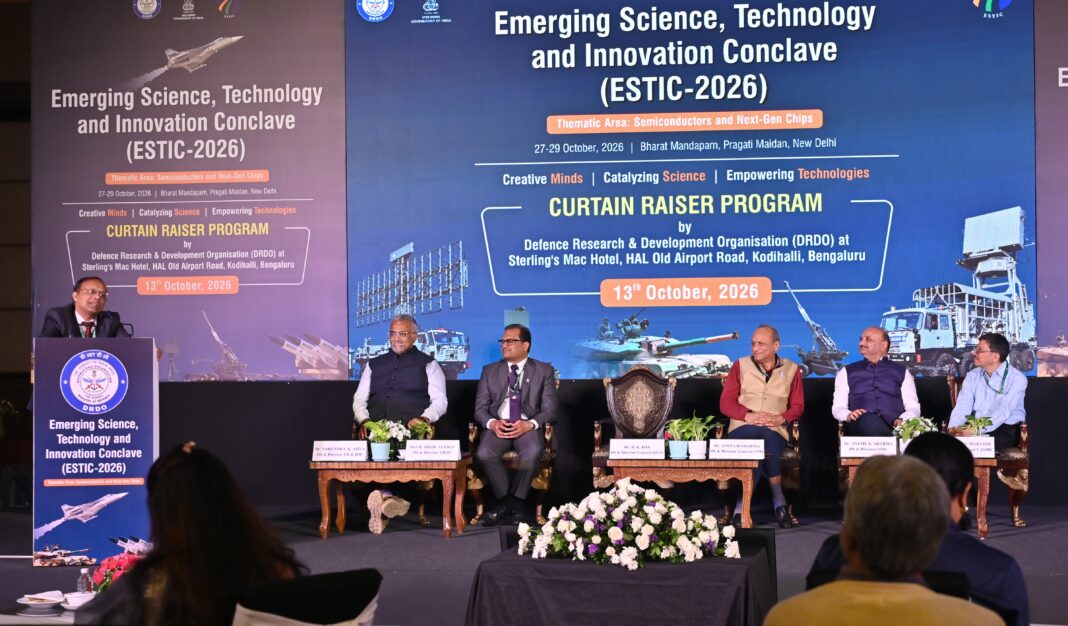
At a curtain-raiser event organised by DRDO in Bengaluru, Karnataka, on October 13, Distinguished Scientist and Director General of Electronics and Communication Systems Dr BK Das highlighted the importance of semiconductors and next-generation chips for economic competitiveness, digital sovereignty and national security.
He emphasised that India needs a resilient, end-to-end microelectronics ecosystem to support telecommunications, automotive systems, industrial automation, AI hardware and strategic defence platforms as the country advances towards Viksit Bharat.
Dr Das also stressed the importance of strengthening domestic capabilities to reduce exposure to global supply-chain disruptions, geopolitical uncertainty and international technology export controls. He said India aims to emerge as a global semiconductor powerhouse, expanding strategic autonomy and high-value exports across the microelectronics value chain.
Distinguished Scientist and Director General of Technology Management Dr Anupam Sharma highlighted the growing role of semiconductors in modern military operations. He noted that these technologies are integral to virtually every aspect of warfare.
Dr Sharma also stated that business in the semiconductor-related segment is expected to reach US$200 billion by 2035.
The curtain-raiser event was attended by senior DRDO officials, including the Director of the Directorate of Extramural Research and Intellectual Property Rights, the Director of the Solid State Physics Laboratory, the Director of the Electronics and Radar Development Establishment, and the Centre Head of the Combat Aircraft Systems Development and Integration Centre.
Through its participation in ESTIC-2026, DRDO will highlight the role of indigenous semiconductor research, advanced electronics and technological collaboration in strengthening India’s defence preparedness and broader scientific capabilities.
Source: (PIB)