Scindia sets target of connecting one billion 5G users by 2030; India aims to strengthen its position in global telecom manufacturing and innovation
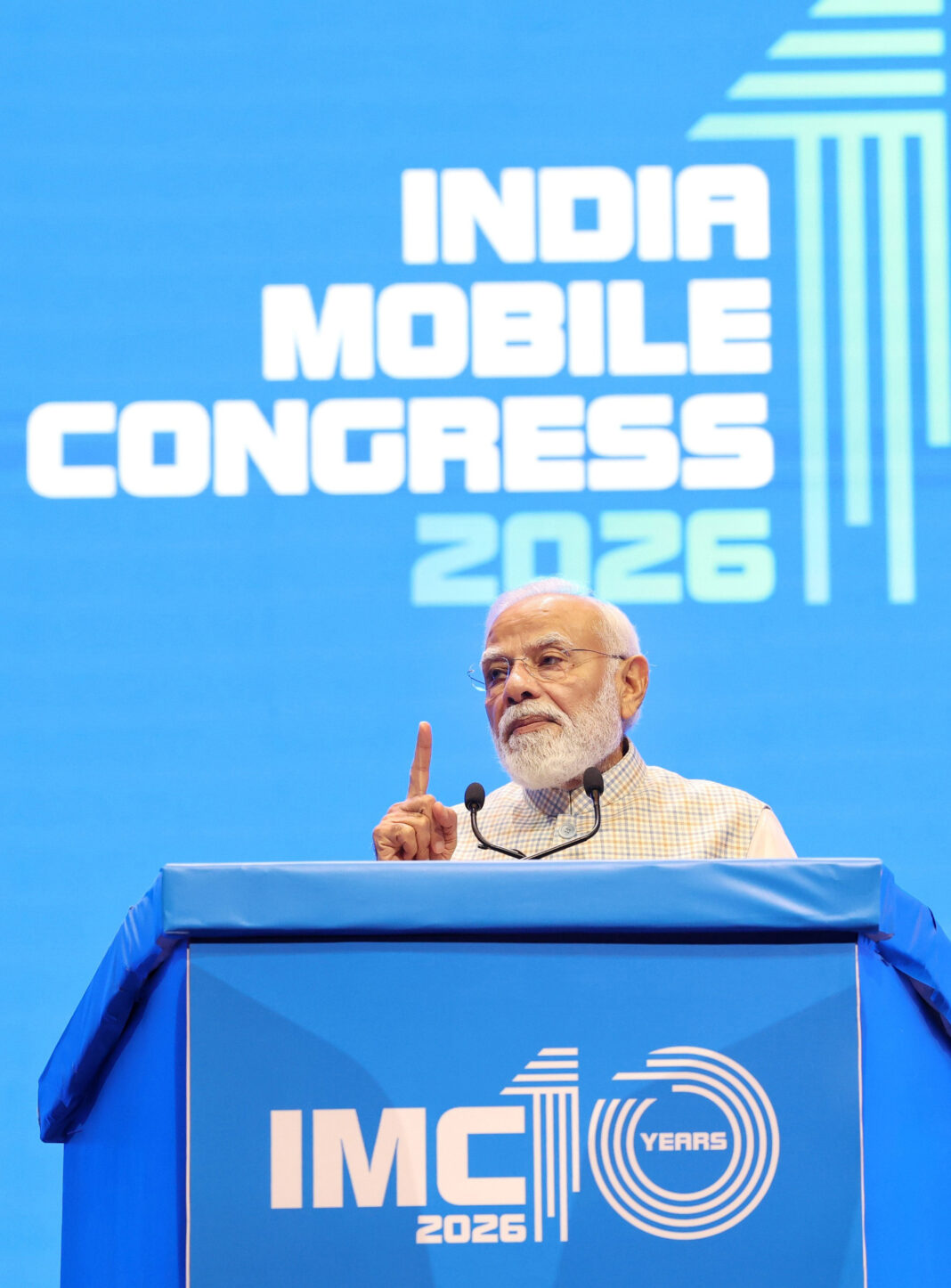
New Delhi : Prime Minister Narendra Modi inaugurated the 10th edition of the India Mobile Congress (IMC) 2026 at Yashobhoomi, New Delhi, on Thursday, highlighting India’s progress in telecommunications, digital governance and indigenous technology development.
Organised jointly by the Department of Telecommunications (DoT) and the Cellular Operators Association of India (COAI), the three-day event is being held under the theme “Scale Without Boundaries”. It brings together telecom operators, technology companies, startups, investors, researchers and policymakers to discuss emerging technologies and the future of digital connectivity.
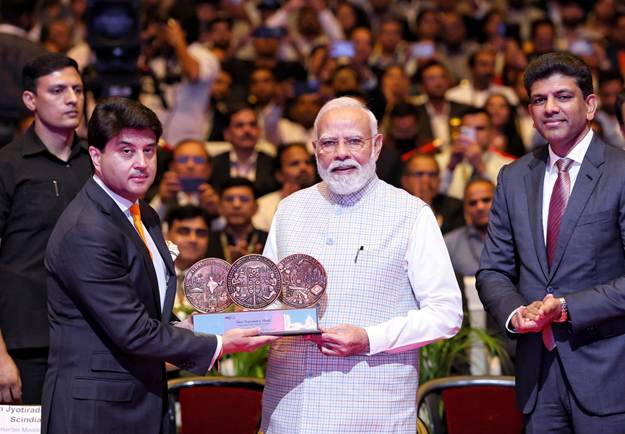
Union Communications Minister Jyotiraditya M. Scindia and Minister of State for Communications and Rural Development Chandra Sekhar Pemmasani were among the dignitaries present.
Addressing the gathering, Modi highlighted the expansion of 5G infrastructure since its launch at the India Mobile Congress in October 2022. He said India had deployed approximately 5.5 lakh 5G base stations, extending coverage to every district, while mobile internet speeds had increased tenfold compared with 2022.
The Prime Minister also highlighted the role of mobile connectivity in delivering public services and government assistance. He said nearly ₹50 lakh crore had been transferred directly to beneficiaries through Direct Benefit Transfer (DBT), helping prevent approximately ₹5 lakh crore from being diverted to unintended recipients.
Modi said India was transitioning from being primarily a consumer of technology to a creator, with the next phase focused on developing products, designs, technology and intellectual property within the country.
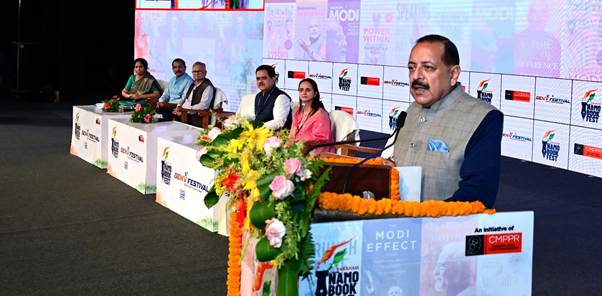
Scindia described the India Mobile Congress’s decade-long journey as a reflection of India’s wider digital transformation. He cited more than 1.35 billion telecom subscribers and over 1.09 billion broadband connections as indicators of the country’s expanding digital ecosystem.
According to the minister, average monthly data consumption per user has risen from around 0.26 GB in 2017 to more than 36 GB, while data prices have fallen significantly.
He said India’s 5G rollout had reached approximately 550 million users and 99.9 per cent of districts, setting the stage for the next phase of expansion.
“Our aim now is clear: to connect 1 billion 5G users by 2030 and lead the next era of global digital innovation,” Scindia said.
He added that India’s next telecom phase would require domestic capabilities across equipment manufacturing, technology design, innovation and advanced semiconductor infrastructure.
IMC 2026 is showcasing developments across satellite connectivity, AI-native networks, pre-6G technologies, sovereign cloud infrastructure, terahertz communications and integrated sensing and communication.
The exhibition also features applications in smart mobility, industrial robotics, transport technology and stadium experiences, reflecting the growing use of telecommunications beyond conventional voice and data services.
Scindia and Pemmasani visited the exhibition area, where they reviewed demonstrations by technology companies and interacted with innovators and industry representatives. The discussions highlighted the importance of collaboration among government, industry, startups and research institutions in developing indigenous solutions.
The event’s programme is organised around four key pillars:
- Srishti — Building the Future: Supporting innovation, emerging technologies and next-generation digital infrastructure.
- Samvardhan — Fueling Growth: Encouraging investment, entrepreneurship, manufacturing and industry-led development.
- Sashakt — Expanding Opportunities: Using digital technologies to create opportunities for citizens, businesses and communities.
- Suraksha — Strengthening Trust: Promoting secure, resilient and trusted digital networks.
The event is drawing participation from more than 100 countries, providing a platform for international dialogue, technology partnerships and investment opportunities.
The Department of Telecommunications is presenting its “Samridh Gram” initiative at its pavilion, highlighting the role of telecommunications in rural development and inclusive growth.
The pavilion also showcases citizen-focused initiatives such as Sanchar Saathi, the Financial Fraud Risk Indicator (FRI), and programmes associated with the Telecommunication Engineering Centre and WMO, as described in the department’s announcement.
The exhibition further features new telecom products and technology solutions developed by Indian companies, reflecting efforts to expand domestic manufacturing and strengthen India’s participation in the global telecommunications value chain.
According to pre-event projections from the Department of Telecommunications, IMC 2026 was expected to attract more than 1.5 lakh attendees, over 500 exhibitors and partners, more than 600 startups and over 900 thought leaders. The projections also included 120-plus sessions and around 700 investor meetings.
The event continues through October 9, with discussions and demonstrations focused on moving emerging technologies from research and pilot projects to large-scale deployment.
The government’s broader objective is to strengthen India’s position as a developer, manufacturer and exporter of digital technologies while expanding access to secure and inclusive connectivity as part of its Viksit Bharat 2047 vision.