The Bureau of Indian Standards (BIS), the National Standards Bodies of India, is ready to release the annual program for Standardisation (APS) for the year 2025-26. It follows stakeholder consultations conducted by BIS from 5 March to 11 March 2025, where representatives of 40 ministries and 84 industry associations participated and shared valuable insight and recommendations through brief presentations.
The APS 2025-26 will include new standards to be developed and the existing standards to be revised in the coming year will be included. BIS has also introduced a digital interface that allows stakeholders to upload proposals and track their progress. The effort aligns with continuous efforts to increase the adoption rate of more than 23,000 standards developed by BIS, which ensures globally approved quality in various fields.
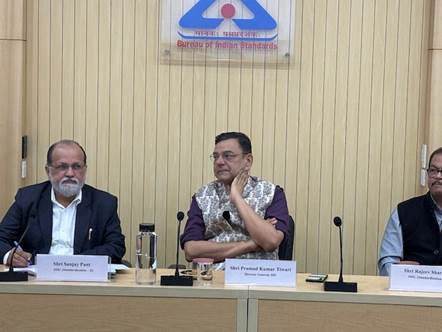
Recently, while addressing the stakeholder meeting, the Director General of BIS, Mr. Pramod Kumar Tiwari urged the representatives of the ministries and industry associations to actively contribute to the development of the proposed standards and nominate relevant experts whenever needed. He said, “The annual program for standardization 2025-26 will not only provide the facility of required standardization with a concentrated strategic approach, ensuring that the priority is given to the topics of special concern, Rather, these standards will also promote widely adopting and easy implementation. “
BIS Standardisation works closely with ministries and industry associations through cells, the purpose of which is to identify gaps and participate in the construction of national standards. Prior to consultative meetings to prepare APS for 2025-26, BIS conducted a range of focus group meetings from 24 August to 25 January as well as a comprehensive mapping of Indian standards against various schemes and missions of India.
The APS 2025-26 is expected to increase the manufacture of priority standards in manufacturing and service sectors to promote widespread adoption and spontaneous implementation.