Bharat 6G Alliance signs five MoUs, releases nine white papers and publishes progress report on New Delhi 6G Declaration
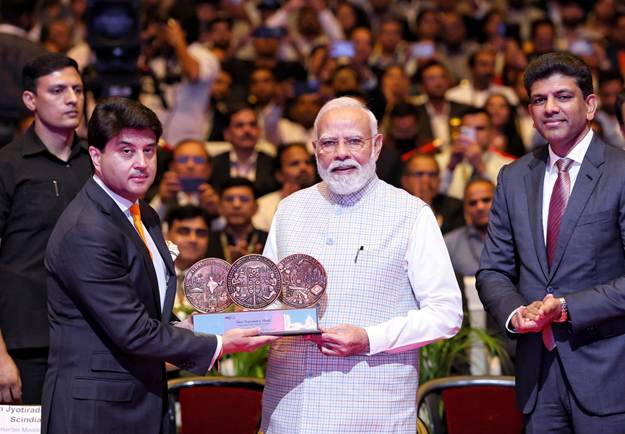
New Delhi : Union Communications Minister Jyotiraditya M. Scindia inaugurated the 3rd International Bharat 6G Symposium 2026 at Yashobhoomi in Dwarka, New Delhi, on Thursday, marking another step in India’s efforts to develop an indigenous and globally competitive sixth-generation telecommunications ecosystem.
Organised by the Bharat 6G Alliance (B6GA), the symposium brings together policymakers, telecom operators, technology companies, international alliances, academic institutions and researchers to advance cooperation on next-generation communication technologies.
The inauguration featured the exchange of five Memoranda of Understanding (MoUs), the release of nine technical white papers and the publication of a joint report reviewing progress under the New Delhi 6G Declaration.
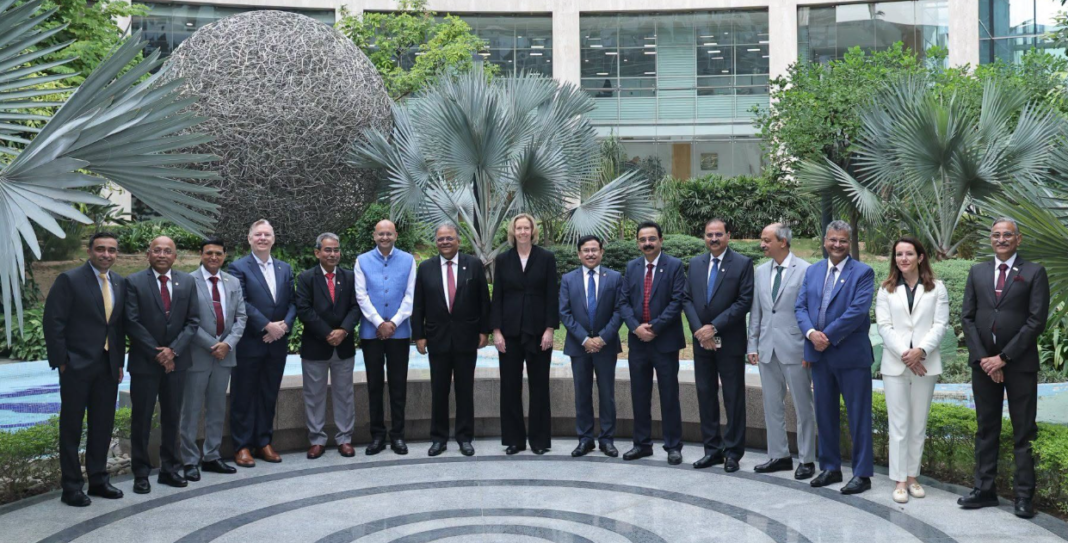
The Bharat 6G Alliance exchanged MoUs with five organisations: GSMA, one6G Association, GTI Alliance Ltd, 6G Industry Forum (6GIF) and VoICE.
The partnerships are intended to strengthen cooperation in research, innovation, technology development, standardisation and the deployment of future communication networks.
According to the announcement, the alliance already had 10 global and two domestic MoU or Memorandum of Intent (MoI) collaborations. With the latest agreements, its broader partnership network now comprises 17 collaborations.
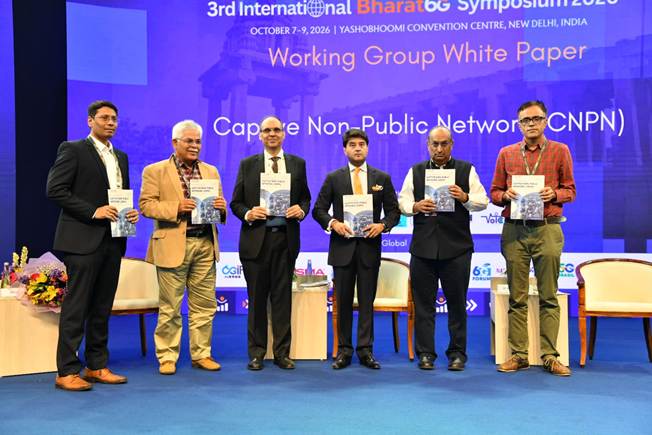
The symposium also saw the release of nine white papers prepared by the Bharat 6G Alliance’s working groups. The publications examine technological, policy and infrastructure priorities for India’s transition towards 6G.
The papers cover:
- 6G Technology Landscape Survey and Roadmap: Research and development, platforms and trials in India.
- Integrated Sensing and Communication (ISAC): Technologies, architectures, applications and future directions.
- Fixed Wireless Access: Its role in strengthening India’s broadband connectivity from 5G to 6G.
- Optical Technologies for 6G: The role of optical systems in next-generation networks.
- IMT Spectrum Readiness: Spectrum requirements and preparedness towards 2030 and beyond.
- Sustainable 6G: Designing networks to support a net-zero carbon future.
- Cellular and Wi-Fi Synergy: Approaches to expanding inclusive connectivity.
- Captive Non-Public Networks (CNPN): Dedicated network infrastructure for specific organisations and enterprises.
- Security for 6G: Security considerations for future telecommunications systems.
Together, the publications address network security, spectrum planning, sustainable infrastructure, enterprise connectivity, broadband access and the technologies required to support future digital services.
Another key development was the release of the joint report titled Progress towards the 6G Principles of the New Delhi Declaration: Actions, Outcomes and Outlook – First Edition, October 2026.
The report marks one year since the New Delhi Declaration was endorsed at the 2025 International Bharat 6G Symposium. It documents progress and outcomes reported by participating MoU partners in advancing the declaration’s principles.
The declaration provides a shared framework for developing 6G as a secure, resilient, open, interoperable, inclusive and sustainable technology ecosystem. It also emphasises international cooperation in research, innovation and standards development.
The Bharat 6G Alliance serves as a platform for collaboration among government, industry, academia and research institutions. Its activities include supporting technology development, trials, intellectual property creation, international partnerships and participation in global standards-setting processes.
The three-day symposium, being held from October 7 to 9, features discussions on the global vision for 6G, technology standards, trials and testbeds, artificial intelligence-native networks, sustainability, spectrum planning, industrial applications and international cooperation.
The alliance said it would continue working with domestic and international partners to help build a secure, inclusive, sustainable and globally interoperable 6G ecosystem, while strengthening India’s contribution to next-generation telecommunications.